Mostrando las entradas con la etiqueta communication consultancy in Peru. Mostrar todas las entradas

sábado, 11 de enero de 2020

► EMOTIONAL INTELLIGENCE AND YOUR CAREER PORTOFOLIO


When it comes to talk about job hunting, we necessary need to talk about personal branding. 

But, personal branding is not only the clothes you wear or the grafic design you use in your collaterals, or personal cards.

It is about the way you knit your personal relations and how can you make them deep and trustful. 

So at the end of the day we are talking about emotional intelligence. 

I came across with an article written by Anita Martel, which I would like to share with you guys; as a cornerstone of a wider topic I'd like to talk along this year: personal branding.

EMOTIONAL INTELLIGENCE AND YOUR CAREER PORTOFOLIO
(*) Anita Martel
Having an up-to-date emotional intelligence assessment has become one of your greatest assets in your job search strategy. Why? Because by doing so you’ve reduced the risk the hiring manager has in hiring YOU.

An emotional intelligence assessment gives you concrete and valid evidence that complements your resume and provides tangible proof to a potential employer. 

Hiring managers are risk averse, and by making their job virtually risk free you have just given yourself a leg up on the competition. 

The added plus to having your emotional intelligence assessed is that you can speak with complete confidence during an interview. 

You gain valuable insight that you can use to your benefit. By knowing your strong points, you can further build on them and use them to position yourself advantageously. 

In addition, by knowing your weaker points, you can specifically concentrate on improving them. It is strongly recommended that you retake the test at 2- to 3-year intervals to reevaluate your progress over time. 

In the workplace, an ever-increasing number of employers are choosing to use emotional intelligence assessments to ensure a greater fit of potential and current employees within their company culture. 

It is becoming more and more obvious to today’s companies that their work force can no longer be managed in the traditional style. That is, today’s employee is no longer just a part of the puzzle that completes the big picture but has become the process with which to do it. 

Organizations are now filled with highly educated knowledge workers that as a team have become this process. 

This is in essence what will give one company a distinct competitive advantage over another, and today’s companies are specifically looking for that edge. 

On the personal side of things, none of us live in a vacuum, and we can clearly see how our personal life always ends up trickling into our professional life at one time or another. 

We develop relationships with everyone around us. How well we manage those relationships can have a significant impact on both our professional as well as our personal lives. 

Having vibrant, healthy relationships has become the core competitive advantage in today’s workplace. So what exactly is emotional intelligence? 

“Emotional intelligence is the unique repertoire of emotional skills that a person uses to navigate the everyday challenges of life” (Multi-Health Systems, 2008). 

It is the awareness of one’s emotions and the ability to use those emotions to strengthen one’s performance. Simply put, emotional intelligence is often referred to as common sense or street smarts. 

Research has demonstrated that an individual’s emotional intelligence is often a more accurate predictor of success than that person’s IQ. 

No matter how intellectually intelligent someone is, their success is still governed by how well they can communicate their ideas and interact with their peers. 

As opposed to IQ, which is said to be set early on in life, your emotional intelligence can be substantially strengthened and developed with appropriate training and thus can be improved considerably. 

Since emotional intelligence is elastic, those who lack it can gain it, and those who have it can augment and develop it further. Many emotional intelligence tests exist on the market and all claim to be the best.

I have researched a great number of them and keep coming back to one in particular. The BarOn EQ-I assessment is by far the most comprehensive on the market. 

It assesses interpersonal and intrapersonal skills, stress management, adaptability, and general mood with many other areas within these categories. 

Several different reports can be generated including a leadership one, and its versatility allows individuals to track and work on their emotional intelligence. 

A company wanting to have an accurate predictor of best performers or a comparison/fit for potential employees can also use it. 

It is used worldwide, can be produced in several different languages, and has been scientifically validated.  It can be taken online and completed in about 40 minutes.

You receive a clear and easy-to-read written interpretation of your results, recommendations on what to do to increase your emotional intelligence, and a debriefing session with a certified administrator. 

Remember, you are creating your career portfolio and whatever you can add to it that will put you a step ahead of the competition is essential. 

All good career portfolios include a summary resume, a thorough detailed resume, a number of references, and an up-to-date emotional intelligence assessment.

*Anita Martel is a partner of Perry-Martel International and a Certified BarOn EQ-I administrator. She is devoted to helping leaders, individuals, and teams increase their effectiveness and attain their full potential. For more information or to take the test, e-mail anitam@perrymartel.com.

viernes, 10 de enero de 2020

► Peruvian Mining investment to reach US$12.800 billion in 2020-2021

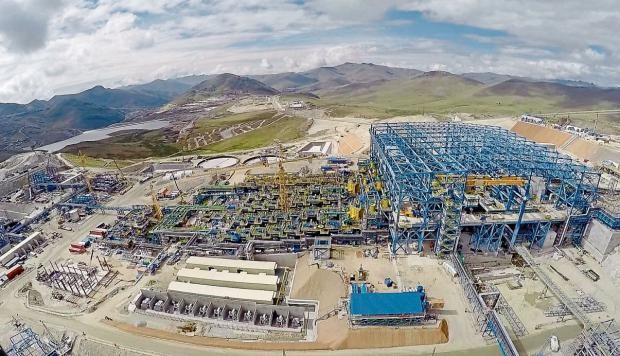
Antapaccay mine pite Lake
Peru's Energy and Mines Ministry (MEM) on Thursday projected the country will receive mining investments worth US$6.300 billion in 2020 and US$6.500 billion in 2021.

Thus, the upward trend —registered since 2017— will remain in place.

Deputy Minister of Mines Augusto Cauti informed that mining investment is close to reaching US$6.000 billion in 2019, thus ending the year with a growth rate of almost 25%.

"This year, we are growing at about 25% in mining sector investments compared to last year. We will reach three consecutive years of expansion, which is not a minor figure considering the global situation," he expressed.

Steady increase

It should be noted mining investment totaled US$3.928 billion in 2017, which meant a growth of 17.8% over 2016.

In 2018, mining investment amounted to US$4.947 billion, thus representing an expansion of 25.9% compared to 2017.

"This improvement is not only important for this sector, but also for the country since mining is one of the driving forces behind the country's growth and the population's development," the deputy minister underlined.

martes, 11 de junio de 2019

► MINING INVESTMENT IN PERU 🇵🇪

A PERSPECTIVE AS A COMMUNICATION SPECIALIST 


Communication is an important keyword in order to understand mining investment in Peru.

Still, there is a lack of investigations about the relation between communication management of focused messages and mining sustainability in Perú. 

Las Bambas mining project was a proper example of this important issue: organizational communications in the peruvian mining sector.

The lack or - at least - bad communications management between stakeholders  brought us  a significant amount of problems in terms of mining investment in Peru and social peace. 

What happened in Las Bambas?

Las Bambas mining project, which is located in the south of the Peruvian Andes. 


It is one of the largest and most technologically challenging mining sites of copper extraction in Peru, and the second largest in America.

In addition, it is the most expensive mining resettlement in the history of the Andean country.


However, its communications management, as well as their crisis management was being heavy critizised.

Take a minute to watch our documental about Corporate Social Responsability at Nexa Resources  


The open pit mine assumes a capacity of 1.08 million tons of copper and its operation exceeds US $ 10 billion

However, its operation has been interrupted for more than 50 days due to a conflict with the residents of the community of Nueva Fuerabamba; who have taken the road and blocked the passage of copper concentrate transport trucks from the mine.


Community of Nueva Fuerabamba consider that the highway contravenes their property, crossing 39 hectares of their land in the Yavi Yavi estate and being classified, without prior consultation, as a national route through a resolution of the Peruvian Ministry of Transport and Communications.


A road in my living room

Las Bambas mining proyect is currently owned by a consortium led by the Chinese MMG, which manages the operation since 2015. Previously, the company was operated by Glencore Xtrata, which developed the first social and community relations strategies. The sale to Chinese capitals was for US $ 5.850 million.

In this context, the town of Fuerabamba was resettled due to the fact that it was in the middle of the mining pit. Along with that, it was proposed to create a development agenda for the area.

However, the social business initiatives generated by the mine got little impact among farmers.

The deal reached between the people and Xtrata involved the construction of a new city (Nueva Fuerabamba), an economic compensation and the handing over of the Yavi Yavi lands, through which an unpaved road that originally was a communal road would pass; the same that currently allows to move the ore to the port of Matarani in Arequipa.

However, for the community members, this road has a great impact on the environment of the area, due to the significant amount of dust raised by 400 trucks that cross it daily, affecting their animals and farmland.

This was the origin of the conflict, so at the very beginning people demanded Xstrata a payment for the road use of about US $ 150 million track in exchange for releasing it.

The pipeline that never happened

When the operation was owned by Glencore Xtrata, it was thought to build a 206 km pipeline to transport the copper concentrate from Las Bambas in Apurimac to Antapaccay in Cusco, where it also had mining operations.

The original plan that was communicated to the community, and was part of the Environmental Impact Study (EIA), was to build a mineral processing plant in the Cusco operation, with which Xtrata would have optimized its operations.

However, along with the change of administration to MMG, the plans also changed and it was decided to process the copper directly at Las Bambas site.

In 2016, the Ollanta Humala administration changes the status of the communal road to national road, which allows MMG to transport its minerals; which implies a modification to what was initially agreed with the community.

The EIA of the project was modified through a Sustaining Technical Report, and MMG decides to transfer minerals by land, which also constitutes the South Peruvian mining corridor.

This change of plans was not communicated, nor explained or consulted to the community, which implies a series of misunderstandings that has already originated 5 citizens killed in previous conflicts in the last 5 years.

Nueva Fuerabamba in Perú

Lack of communication

The present conflict constitutes the most important social crisis of the present administration, and test its political capacity of maneuver in a space as sensitive as the relationship with the communities around the great mining projects; They also represent the real engine of the Peruvian economy and, it is true, they have a very bad reputation.

From this point of view, the current situation constitutes the lack of awarness to the expectations of the people, not only from the Central Government, but also from the mining company itself.

Nevertheless, if the stakeholders identification and hierarchization is bad; the crisis management in progress is even worse.

As we noted above, the changes in the EIA of the project through a Sustainability Technical Report, generated a noise among the surrounding populations, which have been badly used by other actors.

In this case, two lawyers of Nueva Fuerabamba are accused of extortion against MMG, claiming a percentage of the right-of-way payment in exchange for influencing the paralysis and unblocking of the highway.

The appearance of other voices and secondary actors in the scene, suppose the muteness of the protagonists (State and private sector) that would have to lead the narrative of impact and the co-creation of solutions that ensure the progress of the region, and above all, of the corridor miner from southern Peru.

¿Communications Consultancy in Peru?
Email me to luis.durand@durandcom.net

Follow me:

·  FacebookDurandCom
·  Twitter: @durandcom 
·  YouTubedurandcom
·  LinkedIn: Luis Durand

siguenos en facebook Canal de youtube siguenos en Twitter siguenos en Google+ Sígueme en Likedin